
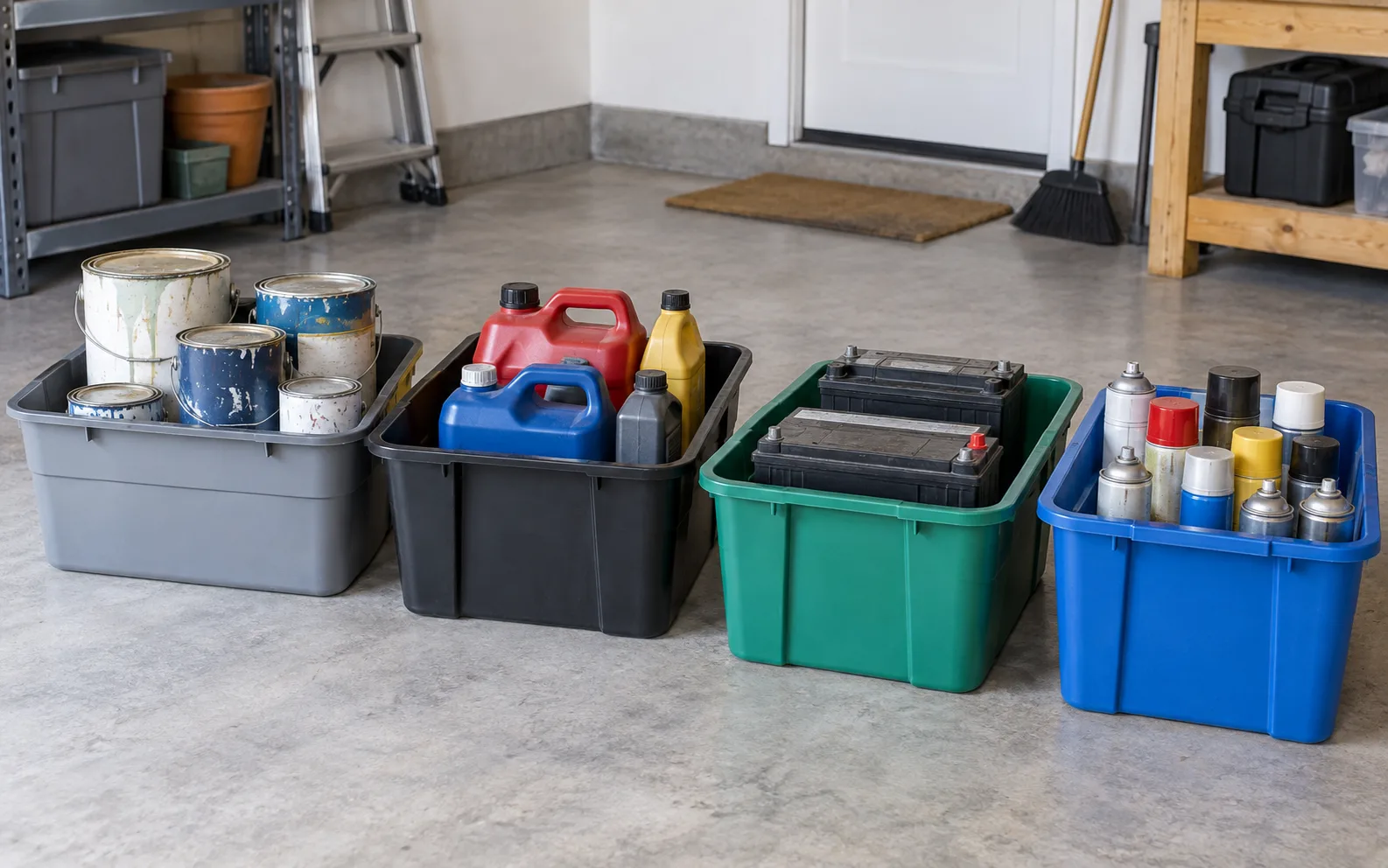
Before anyone starts loading a garage, make a separate pass for products that can burn, react, corrode or poison. The EPA uses those properties to describe many forms of household hazardous waste. Examples include some paints, cleaners, oils, batteries and pesticides.
Common garage items to pull from the pile
- Oil-based paint, thinners and solvents
- Pesticides, herbicides and pool chemicals
- Gasoline, kerosene and fuel mixtures
- Motor oil, antifreeze and automotive fluids
- Household and vehicle batteries
- Aerosol cans that are not empty
- Strong cleaners and corrosive products
- Propane or other compressed-gas cylinders
A product label may include words such as flammable, corrosive, reactive, toxic, poison or danger. Treat an unknown leaking or damaged container as a reason to stop and contact the local hazardous materials authority or fire department for instructions. Do not sniff or open it to identify the contents.
Safe holding steps during the cleanout
- Keep products in their original containers when possible.
- Leave labels in place and keep lids closed.
- Never mix leftovers, even when they appear similar.
- Keep upright containers in separate sturdy secondary bins.
- Protect the area from children, pets, heat and ignition sources.
- Tell the hauling team about the items before the appointment.
These steps follow the EPA household hazardous waste guidance, retrieved September 18, 2026. The EPA also advises checking with the local environmental, health or solid waste agency because collection options vary by community.
What Gwinnett County says
Gwinnett County identifies paint, thinners, aerosol cans, household cleaners and vehicle-care products as examples of household hazardous waste. It states that incorrect disposal can create fire, reaction, explosion and toxicity risks, and notes that the county and Gwinnett Clean & Beautiful hold collection events. See the county’s waste reduction and household hazardous waste page, retrieved September 18, 2026.
Collection dates, eligible addresses, quantities and accepted materials can change. Check the current event page before loading a vehicle. Buford spans more than one county jurisdiction, so confirm the rules for the property’s address rather than relying on the city name alone.
Do not use a cleanout to hide the problem
Do not bag leaking chemicals with ordinary trash, pour liquids down a drain, or leave cylinders beneath furniture. If a general hauling service cannot accept the material, that does not make the product safe for curbside trash. Keep it separate and use the responsible local authority’s current instructions.
For the ordinary garage contents around the hazardous items, call (678) 697-8928. Name the restricted products first so the team can explain what must stay out of the load.