
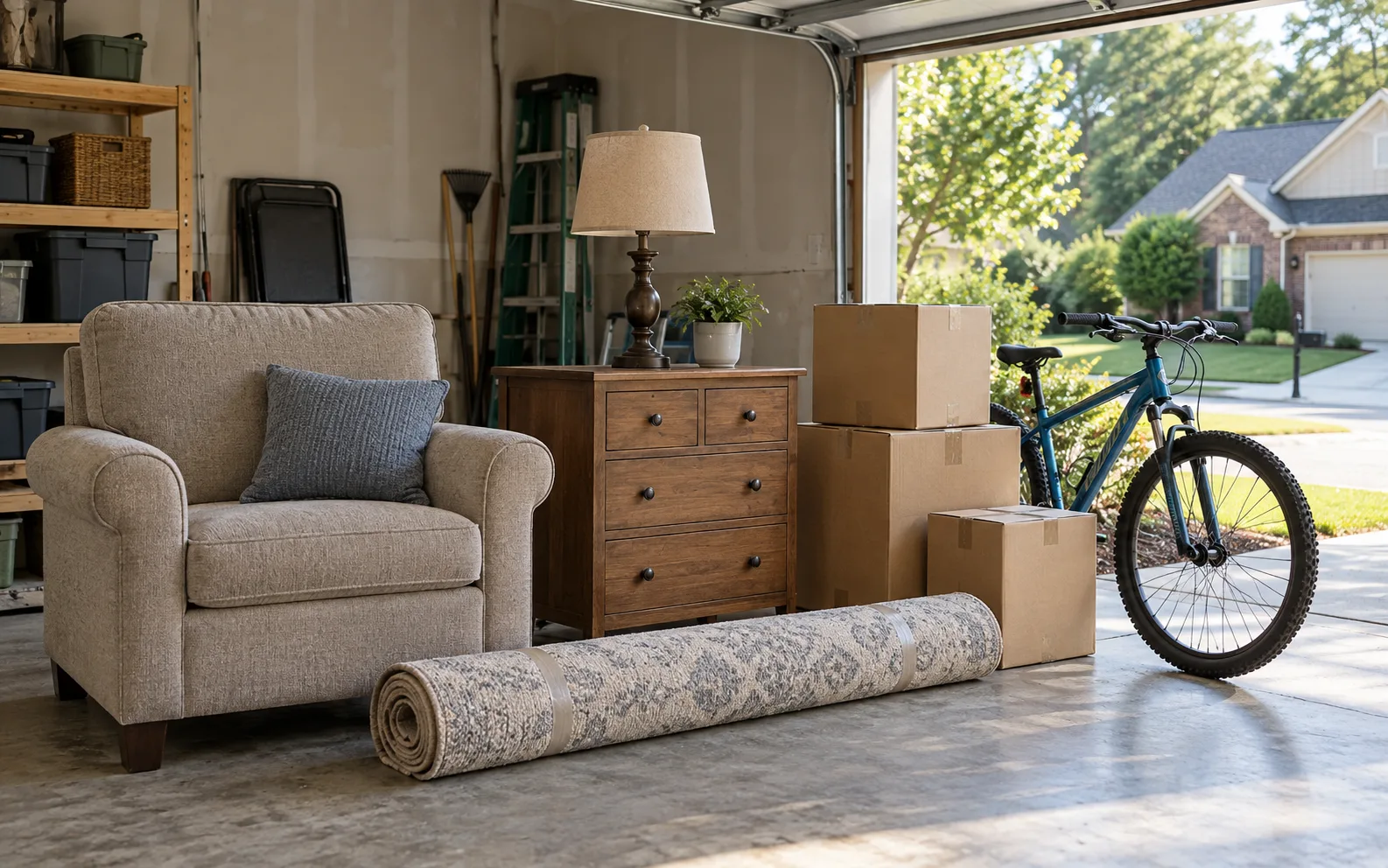
Most garage cleanouts contain a mix of ordinary household goods and a few items that change the plan. Make a category list before calling. The hauling team can then confirm acceptance, preparation and pricing for the actual load instead of guessing from a phrase such as “a full garage.”
Common categories to discuss
| Category | Examples | What to mention |
|---|---|---|
| Furniture | Chairs, tables, dressers, shelves, bed frames | Size, material, stairs and whether pieces are assembled |
| General household goods | Boxes, décor, toys, clothing, kitchenware | Approximate box or bag count and whether anything is loose |
| Sports and yard equipment | Bicycles, exercise gear, tools, empty planters | Heavy bases, sharp edges, fuel or batteries |
| Appliances | Refrigerators, freezers, washers, dryers | Type, size, contents, hookups and refrigerant |
| Electronics | TVs, monitors, printers, computers | Device type, quantity and removable batteries |
| Project debris | Wood, carpet, drywall and fixtures | Material, weight, fasteners and whether it came from contracted work |
Items that need confirmation
Appliances can involve refrigerant, plumbing or electrical connections. Electronics may contain batteries and personal data. Renovation debris is often much heavier than it looks. Tell the team about these items before the appointment rather than hiding them under general boxes.
For electronics, remove personal information before reuse or recycling and ask about batteries separately. The EPA says lithium-ion batteries and devices containing them should not go in household garbage or recycling bins. See the EPA electronics donation and recycling guidance, updated December 19, 2025 and retrieved September 18, 2026.
Keep these out of the general pile
Paint, solvents, pesticides, cleaners, automotive fluids, fuel, ammunition, medical waste and compressed cylinders should not be mixed with ordinary garage contents. Gwinnett County lists batteries, chemicals, hazardous waste, paint solvents and several other materials among items that residential haulers do not accept curbside. Check its current residential services guidance, retrieved September 18, 2026 and applicable to Gwinnett County service areas.
Buford addresses can fall under different local service arrangements, so use the property’s exact address when checking municipal or county rules. A junk removal company’s acceptance rules may also differ from curbside collection rules.
Five questions that get a clear answer
- Do you accept this exact item and material?
- Does it need to be empty, disconnected or otherwise prepared?
- Will it change the estimate because of weight or handling?
- Can the crew remove it from its current location?
- If you cannot take it, which local authority should I check?
Have an item that does not fit the list? Call (678) 697-8928 and name it directly. A photo with the item’s full size and access route is more useful than a close-up.